A spiritual confidant of mine inspired me to explore a new way to understand how Jesus has the power to be, in his own words, “the way, the truth, and the life.” Below, I’ll give you the broader context of what Jesus said, but I won’t cite chapter and verse. You will have no problem finding it if desired.
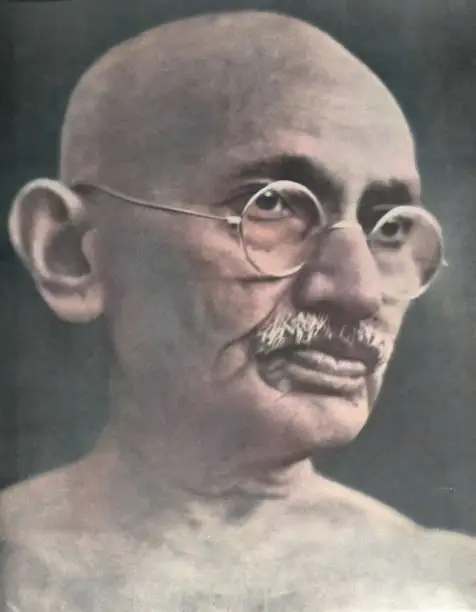
My confidant is a fellow seeker who has not given up on Christianity, mainly because he can separate in his mind the person of Jesus from those who claim to follow him. Many of us, who lament the Christian disconnect, know of the quote, attributed probably apocryphally to Gandhi, that, “I like your Christ, I do not like your Christians. Your Christians are so unlike your Christ.”
I had mentioned a recent conversation with another friend who was in the process of ditching Christianity altogether. This friend had a disconcerting response to me when I said that the teachings of Jesus had convinced me that he is the way, the truth, and the life. He zoomed in on the idea that, if Jesus is the way, then everyone who doesn’t know Jesus or doesn’t choose that particular way is doomed. He put it to me in words that drove the point home. I can’t remember exactly what he said, but I got the message. Something didn’t sit right about it. This guy from Palestine two thousand years ago was the only way, even though the world had Chinese people halfway around the other side, or Aztecs on another continent, and these were simply humans to be trashed?
Even without further investigating how it could be so, I said I didn’t think all those people were doomed. Nor are all non-Christians today, in my belief. Is this an inconsistency on my part? I knew I needed to think more about this. I already thought Gandhi could be in heaven, be among God’s elect, be “saved.” But was this right or not? Could someone who did not even claim to be a Christian find the favor of Jesus?
First, I’ll give you the quote from the gospel in greater context:
Jesus said to his disciples, “Do not let your hearts be troubled. You believe in God; believe also in me. My Father’s house has many rooms; if that were not so, would I have told you that I am going there to prepare a place for you? And if I go and prepare a place for you, I will come back and take you to be with me, that you also may be where I am. You know the way to the place where I am going.”
Thomas said to him, “Lord, we do not know where you are going, so how can we know the way?”
Jesus answered, “I am the way and the truth and the life. No one comes to the father except through me. If you really know me, you will know my Father as well. From now on, you do know him and have seen him.”
I do not have the passage in Greek, so I’ll simply consider possible interpretations of the English. Both being “the way” and going “through” him say nothing about the agency of the person. Does Jesus mean that we must each choose to believe in him or knowingly choose to follow his teachings? Or does he mean that, for reasons of his own, he selects those whom he brings to the place he said he was preparing? Is it your feet or the authority of Jesus that takes you the right way? Do you choose or does Jesus choose?
The gospels present several stories about Jesus that open the possibility of salvation being available to all, not just to observant Jews. Here’s a list of instances where Jesus chooses someone unexpectedly:
-
-
- Zacchaeus, the tax collector (Luke 19)
- the Samaritan woman at the well (John 4)
- the Roman centurion (Matthew 8:8-12)
- Matthew, the tax collector (Luke 5:27-32)
- healing the “unclean” leper (Luke 5: 12-16)
- the sinful woman who poured oil on the feet of Jesus (Luke 7:36-50)
- the adulterous woman who was about to be stoned (John 8: 1-11)
- healing the man filled with demons (Luke 8:26-39)
- eating with “many tax collectors and sinners” (Luke 19:10)
- the parable of the Samaritan on the road (Luke 10:25-37)
Let’s consider the story of the Roman centurion, who hoped Jesus would heal one of his servants:
Jesus said to him, “Shall I come and heal him?”
The centurion replied, “Lord, I do not deserve to have you come under my roof. But just say the word, and my servant will be healed. For I myself am a man under authority, with soldiers under me. I tell this one, ‘Go,’ and he goes; and that one, ‘Come,’ and he comes. I say to my servant, ‘Do this,’ and he does it.”
When Jesus heard this, he was amazed and said to those following him, “Truly I tell you, I have not found anyone in Israel with such great faith. I say to you that many will come from the east and the west, and will take their places at the feast with Abraham, Isaac, and Jacob in the kingdom of heaven. But the subjects of the kingdom will be thrown outside, into the darkness, where there will be weeping and gnashing of teeth.”
Then Jesus said to the centurion, “Go! Let it be done just as you believed it would.” And his servant was healed at that moment.
Jesus praises this Roman (an anathema to the Jews) as an example of someone he would choose as a worthy citizen of his Kingdom. This seems to have been based on the fact that the centurion trusted the healing ability of Jesus, rather than his divinity. And the “subjects of the Kingdom” are thrown out, in this telling. We who suppose we are part of the Kingdom should not necessarily be so sure of ourselves.
This says his followers must count on faith or trust, rather than obedience and certainty. And it leaves open the possibility that Jesus may select others for reasons of his own that his followers have no right to judge.
The well-known story of the good Samaritan is also enlightening. This person was not considered among the elect, being a non-Jew. But he showed compassion to an injured man on the road, whereas devout Jews had avoided helping him, passing by on the other side. Jesus says the Samaritan would enter the Kingdom before those others. It was not those who claim to be followers. It was not those who claim they have chosen Jesus, but those whom Jesus has chosen.
I haven’t mentioned another attitude of Jesus that the gospels make clear. Many passages show what he thought of the Pharisees, those supercilious religious gatekeepers. Jesus demands that we abandon self-righteousness. No religious practices are sufficient to guarantee our way into the Kingdom.
E. Stanley Jones was a Christian missionary in India, where he knew Gandhi personally. Here is a short list of quotes from his book, The Christ of the Indian Road:
If those who have not the spirit of Jesus are none of his, no matter what outward symbols they possess, then conversely those who have the spirit of Jesus are his, no matter what outward symbols they may lack.
Whatever gets your attention finally gets you.
I never understood the meaning of Christianity until I saw it in Gandhi.
You Christians—you are not like him.
Jesus did not come to bring a way of life—he came to be Life itself.
Of course, gaining all this wisdom does not provide certainty that Jesus will choose us. But the gospels make clear that no followers of Jesus are his gatekeepers. We are left to ask his forgiveness and to trust.
I don’t know if this meditation will help my friend who is about to chuck Christianity off a cliff. He was raised in a fundamentalist home, but his faith got more nuanced as he matured. Finally, in recent days, the way so many Christians think Trump is God’s chosen leader sickens my friend to the point of doing something drastic.
I think Jesus might be ok with people tossing such faith. My friend can look over the edge any time and see the map of his former path far down below. His life is not over yet. Jesus might choose him, even though what he had thought he was supposed to believe is at the bottom of a cliff.
-
-
-
Dan, before I left the Church and Christianity, a “new understanding” of Christ being the way for me was best encapsulated in what the early church believed, as known through their available writings. The Greek speaking early church fathers, reading the scriptures in their native tongue, predominantly espoused the idea of “the restoration of all things” discussed in passages like Colossians 1:15-23 up through at least AD 400, with the few exceptions not believing in eternal damnation but rather in annihilation of the wicked. And other than Tertullian, the Latin speaking church fathers were not opposed to the belief in restoration until Augustine, in his later years, adopted the doctrine of eternal punishment while acknowledging the prevalence of the belief in restoration. From there, eternal damnation became entrenched in the Roman (Latin speaking) Catholic church but not so much in the Eastern Orthodox (Greek speaking) church. That could have something to do with it being an incredibly powerful fear based tool for manipulation and control.
Apokatastasis is the name of the belief in the restoration of all things used by the early church, referencing Acts 3:21, but the same root word is used in passaged like Colossians 1. To use your concept of God choosing those to save, in apokatastasis God chose to save everyone through Jesus (“As in Adam ALL die, so also in Christ shall ALL be made alive”, Romans 6, et al). This doesn’t negate the reality of the significance of choosing to live in that salvation (or of Him choosing some for salvation) in this life: “That is why we labor and strive, because we have put our hope in the living God, who is the Savior of all people, and especially of those who believe.” (1 Tim 4).
Nor does it negate the reality of God’s corrective punishment and judgment, it just relegates them to a specific age or period of time rather than to eternity. That is because the early Greek speaking church fathers didn’t ascribe the meaning “eternal” to the Greek Aion like modern English translations do in order to establish the doctrine of eternal punishment and separation.
Christianity was unique and truly good news not because it taught a new and different way to avoid the hell described in pagan religions (but, importantly, not in Judaism), but because it taught that God was going to make it all new and fix the whole problem of evil, not just relegate it to a forsaken corner of the universe where most humans who ever lived would dwell permanently and perpetually. That was the real wonder described in the closing verses of Paul’s theological treatise in Romans 1-11 (and the only thing that makes sense of it in my opinion) and the thing that made him worthy of praise in Phil 2:11.
Part of my leaving the church was the realization that both Catholicism and Protestantism have taken what was once quite a beautiful message “for all people” (like the lost sheep one way or another he would pursue even into eternity if necessary) and turned it into the worst horror show imaginable for most people. It is objectively, factually demonstrable that modern Christianity largely believes something foundationally different than the early church (virtually all extant early church writings are available online and free in both English and Ancient Greek. One of the seminal works on the subject is also available free online “Universalism: The prevailing doctrine of the Christian church during its first five hundred years” by JW Hanson) . But religious tradition is such that it is a non starter to even try and talk about it. It is beyond reform. I don’t think you will find a truly “new understanding” of what God is actually doing in the world thru Jesus if you look for it among those who adopt as one of their foundational premises a horrific end game by his hand.
Steve, I needed a good bit of time to consider your comment, and I appreciated the thinking that has gone into a years-long spiritual journey. Perhaps part of your reply was informed by your post-high school theological studies. Thanks for giving us a better idea of where you are coming from than I had alluded to.
Leaving the church is not a hard sell for many of us, especially introverts like me. Churches need to modernize or something. I won’t go into what would have to happen to draw me back that way. But community is healthy, and we need to build good ways to be with each other in person.
No doubt leaving “Christianity” has also become less and less of a hard sell, since, in addition to the baggage of church services, so much of it seems to be moving away from Jesus, as interpreted by even modern English translations.
Sounds like you and I both would like to see a true revival, assuming a Creator really does exist and Jesus was one of his manifestations on Earth. But even past revivals, in the hands of fallible humans, have ended up not reviving anything, possibly resulting in nutty responses like Mormonism.
Ok, so you leave the church and Christianity. What about that Jesus character? Plenty of support for rejection can be found on YouTube, such as scholars arguing the whole gospel was a made-up hoax or that a historical Jesus never existed, much less someone performing miracles. Yet, the mystery remains of how a small group of radicals emerging from within a small regional religion, in a backwater of the Roman world under severe repression, could have so quickly risen and overpowered the Empire?
Wherever they came from, the teachings of Jesus are amazing. In line with my blog post above, it seems possible that Jesus could choose a person for his kingdom, even without them “confessing” him as savior or declaring him the son of God.
This is why I like the idea of keeping as few of our beliefs as possible in group A (see planets) and making Christian spirituality as simple as appreciating Jesus (see I dig Jesus). And why I conclude the above blog with the suspicion that adopting atheism may not be the only option for having jettisoned so much former belief.
If everyone is going to be included in the restoration of all things, it sure seems like some will need more restoration work than others. This leads to the hypothesis that heaven will have levels, or a purgatory, or a bardo. After all, real restoration of a human being would have to take time. Given an eternity to work with, who knows how long the scuffed-up furniture of some people’s hearts will take to strip damaged sealer, fill dings, sand, and refinish! None of us will get to decide how much restoration each of us needs.
Steve, you appear to me to be speaking not as one who has left the Church and Christianity but as one who is trying to wrest the tradition from our loud conservative Evangelical neighbors. Here we are talking about it, so how can it be beyond reform? The church I am a member of does tend toward apokatastasis (though this is the first time I have heard the word.) A more accurate expression would be to say it is not our [human] department to decide such things but to live apokatastasis. To do otherwise would indeed lead to a horror show. When I took Catechesis of the Good Shepherd training with a bunch of Catholics, apokatastasis was taught. So instead of giving outsized attention to the so-called Christians who want to be the gatekeepers, why don’t we follow Jesus the way we know how and take back Christianity?
Mary, your response to Steve is a good one, especially as I tend to agree with him about rejecting church attendance. Yet, lots of attempts at church are in progress, and I must admit that I’m too lazy to go visit and check them out. I really don’t condemn churches for trying to follow Jesus. Maybe I would stress that following Jesus comes first, then maybe the rituals of church, if they align with his teachings. Interesting to hear that you have experienced more than one effort to make apokatastasis a thing. You are familiar with it without having previously known the Greek!