Here’s a short review of Ron Chernow’s three biographies, titled Alexander Hamilton (2004), Grant (2017), and Mark Twain (2025). I have not read one of his in-between books, Washington (2010). I’ll focus on impressions of these three icons of American history, while offering only a few comments about Chernow as a historian and biographer. I won’t take them one at a time, but rather, mix them into one discussion.
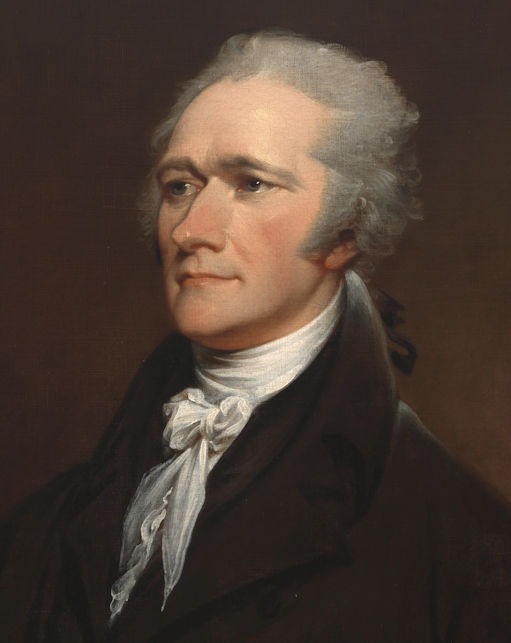
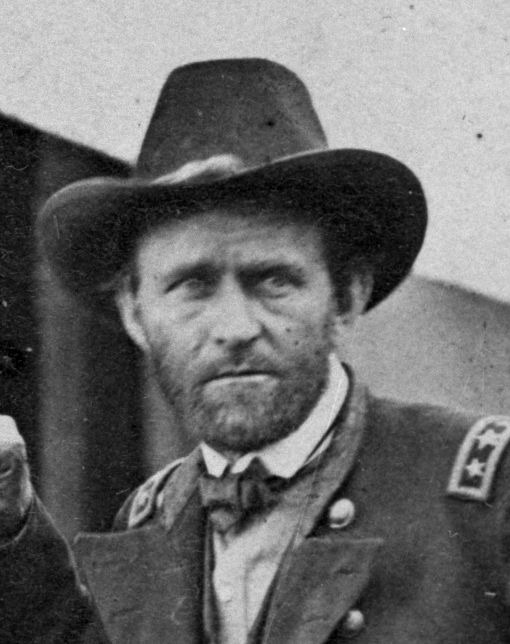
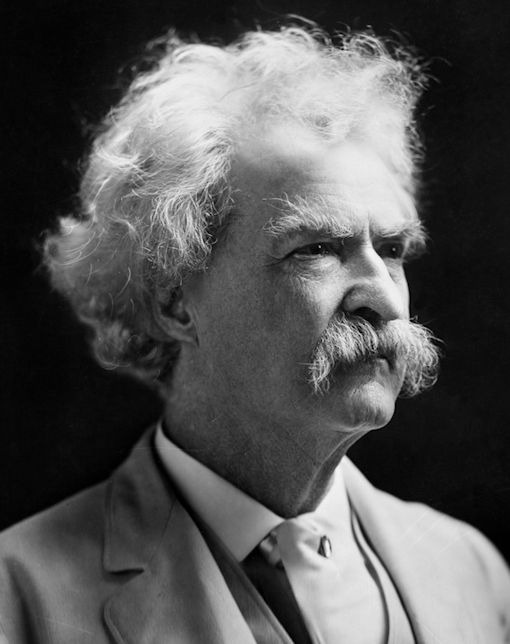
credits: Hamilton painting, 1806 by by John Trumbull / Giuseppe Ceracchi – Smithsonian National Portrait Gallery. Grant photo by Egbert Guy Fowx, Headquarters at Cold Harbor, Virginia, June 1864, United States Library of Congress’s Prints and Photographs Division. Twain photo by A.F. Bradley, 1907, Library of Congress.
Overall, I like Chernow as a writer and skipped no pages of the three biographies. I read Hamilton first, a hardback copy borrowed from the library. This was before the Broadway show, which may be why I have not yet seen the play. The book was excellent, and I learned plenty of new information. But the biography had no singing or dancing, and Hamilton was neither a black man nor Hispanic. Not that I object to making plays about historical events with diverse actors. Neither did I have issues with the recent movie casting choices for Homer’s Odyssey, a story I know well.
Next, I went to Grant, the Civil War general whose life I also thought I knew pretty well, having read his highly regarded memoirs. Via audiobook, Chernow provided new information about the two-term presidency, somewhat redeeming Grant’s reputation as a corrupt incompetent.
Finally, and most recently, I listened to Mark Twain as an audiobook. He came and went with Halley’s Comet, which most people know, but I appreciated learning much more about his character.
Were They Amiable?
Suppose you travelled back in time and were lucky enough to meet each of these now revered men. Would you have befriended them? Knowing the trajectory of their entire lives, would you have steered clear or wanted to become a confidant?
Maybe you could have come upon them before they were famous. Were their personalities such that they might have cared to get to know you?
In 1755, Hamilton was born in the West Indies to a twice-married mother and a father who left them. Yet, Alexander seems to have been precociously intelligent, a hustler who continuously set and achieved goals. How do you suppose this guy got to the American colonies and, at a mere twenty years old, managed to join the staff of General Washington during the American Revolution? He had already written pamphlets advocating for independence. At thirty-two, he played an influential role in forming the US Constitution and, along with future president James Madison, wrote many of the Federalist Papers to provide intellectual support.
Could you have been a friend of Hamilton? He was likely impatient with anyone who could not come close to matching his intellect. He was handsome and popular; thus tended toward arrogance. During our country’s foundation, he had numerous political enemies. Yet, historians credit him as a vital participant in forming the new nation.
I would have enjoyed knowing him, but probably would have found him continuously distracted by intellectual pursuits. I like thinking about things, but Hamilton might have been impatient with my more plodding brain. He seems to have been able to think on his feet and provide an instant, already thought-out opinion. Hamilton would probably have declined to go fishing and sit idly on a riverbank shooting the breeze.
Ulysses Grant would have been much easier to befriend. His mother was a devout Christian while his father was more of a scheming small-town businessman. Grant learned the virtue of humility from his mother, along with an ability to treat people kindly. He had military training at West Point, but didn’t particularly stand out, except that everyone saw his horsemanship. Since my family owned horses, I can identify with Grant’s love for them. I think he would have been a great companion. Chernow says that later in life Grant had many real-life stories he would gladly pass on to willing listeners.
One thing I would want to ask Grant. He said in his memoirs that, at the battle of Shiloh, he saw a field so strewn with dead soldiers from both sides that one could have walked across the entire field stepping only on them and never had to touch ground. I would have asked how he managed the trauma. I’m sure he saw horrendous aspects—not just prone, immovable bodies, but blood, guts, and separated body parts would have been everywhere in most battles, I imagine. How did this gentle soul handle it?
Chernow says Grant could keep his head all through a battle, whether things were going well for his army or not. By contrast, the previous generals Lincoln called on tended to lose their nerve and make bad decisions.
Mark Twain was quite a character. He would have been fun to have as a friend, but learning more fully about him makes me feel that one would have to be wary. He had lifelong friends, but he also had several relationships where things went haywire. He sometimes trusted untrustworthy people and then made them into mortal enemies. Sometimes, he felt his trust betrayed when it wasn’t so, and proceeded to consider a friend dead to him when they didn’t deserve it.
Twain grew up relatively poor, but married into wealth. He seems to have been somewhat spoiled by money and fame. Yet, he had a strong marriage and a family of three daughters. The youngest of these had epilepsy, revealed at age fifteen. This put extreme strain on the family, but Twain tended to leave most of the burden of care to others.
Mark Twain was also vulnerable to get-rich-quick schemes and squandered his wife’s inheritance on some of them. When things failed, he tended to blame anyone but himself.
I knew a fair amount about Mark Twain before reading Chernow, but it was good for me to see that he was a real person, with foibles like anyone else. Yet, I feel positive toward him in the end. He was such a talented storyteller. But he also had prescient political views that are relevant today.
Here’s Chernow, chapter 46, quoting Twain, circa 1900, commenting on the fervor surrounding McKinley’s plan to colonize the Philippines:
More and more, [Twain] doubted the ability of the American public to exercise independent judgment and believed that most people parroted what they heard from politicians and the press. Questioning what constituted true patriotism, he grew enraged by the expression, “Our country, right or wrong!” In his notebook, he commented, “We have thrown away the most valuable asset we had: the individual’s right to oppose both flag and country when he believes them to be in the wrong! We have thrown it away, and with it all that was really respectable about that grotesque and laughable word “patriotism.”
Here’s another Twain quote from 1906 in Chernow, chapter 51:
Talking of patriotism, what humbug it is. It is a word that always commemorates a robbery. Patriotism is being carried to insane excess. I know men who do not love God because he is a foreigner.
Even though Twain grew up in the slave state of Missouri, he knew and respected many black people. He maintained a lifelong support of civil rights. As I noted in a previous post, Twain observed that people calling themselves Christians would still seem to be oblivious to the issue of slavery. Chernow says that having grown up in a slave-owning community, yet knowing enslaved people personally, the adult Twain liked to cast ridicule on hypocritical religious leaders and powerful elites. From Chapter 2:
One thing in retrospect that weakened Mark Twain’s faith in the church of his childhood was its unswerving endorsement of slavery. The evidence of slavery’s misery stood scattered all around him. The saddest faces Sam Clemens ever saw were those of a dozen shackled slaves on Hannibal’s dock awaiting shipment farther south, but he heard no condemnation from religious leaders. Nearly half the families in Marion County held at least one person in bondage, almost invariably with a clear conscience.
“In my schoolboy days,” Twain said, “I had no aversion to slavery. The local pulpit taught us that God approved it, that it was a holy thing, and that the doubter need only look in the Bible if he wished to settle his mind.”
Beyond preaching slavery, pastors practiced it unashamedly. Twain remembered one Methodist minister who sold an enslaved child to a fellow minister, who then profited by later selling the child downriver. As the steamboat departed with her offspring, the child’s mother wept inconsolably at the dock.
As he got older and developed into an avid student of history, Twain came to believe that the church had endorsed slavery for centuries, and reformed its position only after congregants turned against it. Church complicity in slavery came to illustrate for him how social institutions could collude in a lie of silent assertion that nothing is going on, which fair and intelligent men are aware of and are engaged by their duty to try to stop.
Ultimately, I think Twain would have made a great friend. He had a temper and a virulent dislike of religion, but his wife served to help him control unhelpful outbursts. She edited a lot of Twain’s writing and kept him from saying things he would later regret.
conclusion
Chernow is a good writer. However, he documents so many details of these three lives that some readers might find it tedious. With Twain in particular, at one point I noted that I was at 1905 in the book, with only five years left before the return of Halley’s Comet and Twain’s death, but was only 75% through the audiobook. I reflect that these long biographies might be best read via audiobook since they can be enjoyed while driving, running errands, or exercising. I never got bored with them, but might have taken longer with hard copies. The Hamilton hard copy version, however, did keep me engaged till the end.