Biographical sketches on Mind in Heart are meant to give glimpses into the lives of real people (ones like us) and their spiritual journeys. They may have had interesting experiences that did not impact them much spiritually, but who can tell? We each have opinions about things that most shaped us. The older we get, the more chances we have to hear other points of view about our most impactful experiences. Suggestions may come from spouses and close friends, mentors, or counselors.
Dick Nystrom seems to have always been spiritually keen while racking up numerous earthly adventures. For example, joining 60s civil rights actions in South Carolina, serving in Vietnam, volunteering in Lesotho for the Peace Corps, and pastoring churches across the USA. At seventy-nine, he is ten years older than I, but especially in our young adult years, that was a pivotal decade. I just missed being on a college campus during anti-war protests or civil rights demonstrations. I got a draft card shortly before the draft was terminated and the Vietnam War sputtered out. While Dick knew firsthand about the civil rights movement, I was unaware at the time that Martin Luther King was shot in my city. (I later went to high school in a Memphis suburb.)
Dick grew up in Cadillac, Michigan, in a close-knit family and community. He credits his mother with helping establish spiritual foundations. During his teen years, they would have discussions around the kitchen table, and she helped him feel like himself, a dignified, knowledgeable participant. The talks revolved around the question, “What does it mean to follow Jesus?”
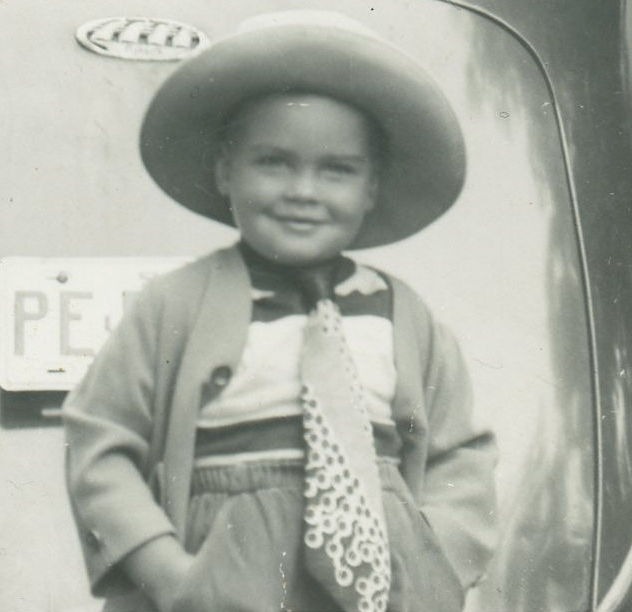
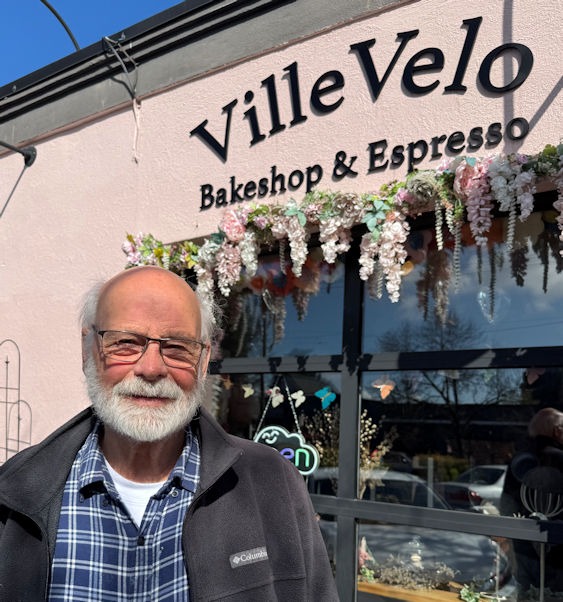
Dick’s father ran a lumber yard and was much appreciated in the community for treating all his customers magnanimously, even those who needed credit for their purchases.
Most of us can attest that, as young adults, we are often idealistic or naïve. This is the process of normal human maturation. Is it better to begin with positivity and an optimistic view of the world, or a bitter, pessimistic one? Growing further into adulthood, we may begin to see things more insightfully. We Christians want to affirm life without pretending that everything is wonderful.
Before turning twenty, Dick had a couple of standout character-building experiences, one involving the civil rights movement and the other Vietnam. While attending North Park College (now a university) in Chicago, he followed the civil rights developments of Martin Luther King and others. During Dick’s 1965 Christmas break, he joined a group that travelled to South Carolina, supporting the movement spearheaded by the Student Nonviolent Coordinating Committee (SNCC). One goal was to help black people register to vote. Dick learned about the intimidation tactics of the Ku Klux Klan (KKK).
Seeing what black people had to endure in the South helped open Dick’s eyes to discrimination also in the North: ways so woven into society that, sadly, most people took no notice. Dick said the prevalent attitude was “casual indifference.” Why worry about things that did not hinder your own goals? Of course, we older folks can see how college kids would normally be this way. Yet, even thirty-somethings can tend to focus only on themselves. As may be true of any of us! Even Christians sometimes forget that the Way of Jesus is the opposite.
Dick determined that his career interest would involve helping people. In his early college years, he did not yet see himself becoming a Christian minister. On the other hand, he felt that Christians may have been too compliant about how men were selected to go fight for them. Many of us did not even know where Vietnam was. (As was said by Ambrose Bierce, “War is how Americans learn geography.”) But Dick saw the inequities of the draft system—taking the less privileged while sparing the rich and well-connected. Almost as a protest, he volunteered for the draft. Today, he says he wanted to “give up my privilege and stand with the vulnerable.”
In 1967, while Americans watched television news reports of the mess in Vietnam, Dick went through Army basic training. He was assigned to the military police and arrived in Vietnam just after the infamous Tet Offensive by the North Vietnamese. Their broad frontal attack in late January 1968 showed that the US forces and South Vietnamese allies were not in control, and the fight was far from over.
Dick’s unit policed a main north-south coastal highway that was kept open only in the daytime. At night, it would be subject to prowling by enemy insurgents. The military police would have to secure it each day and sometimes lead convoys of army vehicles.

The Vietnamese coastal highway today, from Google Maps, Street View
While young, Dick may have been less naïve than the typical American soldier of the time. He noticed many Army behaviors that went against his Christian beliefs. The Vietnamese people, whether enemies or allies, were looked down upon and labeled “gooks.” Dick knew the slur was pure racism.
As early as 1965, significant American opposition to the war was evident from college campuses to newspaper editorials. One reason was that the draft drew mainly from the lower and middle classes, leaving wealthy men many options to avoid participation. Dick had observed this firsthand. In addition, American citizens began to suspect they were being lied to about military successes. Widespread skepticism about the behavior of the army and the justifications put forth by politicians spilled over into the ranks of the soldiers in Vietnam.
Dick saw a military that behaved badly, and it broke his heart. Coming home after his 1968-1969 tour, Dick admits his attitude had changed. But his hurt was compounded by what he saw in American churches. The people didn’t care about what others had to suffer, whether frontline soldiers, Vietnamese farmers, Southern Black voters, or poor people in American big cities. Dick went from heartsick to angry. He would not stand for the Pledge of Allegiance and would not go to church. He wrestled with his Vietnam experiences, what he had learned there, and what to do next.
Daniel Berrigan, an anti-war Catholic priest, and Howard Zinn, a well-known historian associated with SNCC, went to Vietnam in the same timeframe as Dick. They met with North Vietnamese officials, which angered US politicians. Daniel and his brother Philip went on to more outspoken and illegal anti-war activities. Today, Dick says that had he known more about them at the time, he might have joined in their work.
Even though Dick volunteered to serve in Vietnam, he had always opposed the war. Before going, he wrote several letters to congresspeople expressing opposition. But he was only twenty-one and went to war as a form of protest. He served with men who had no choice, but the entire experience left him disillusioned. Having an aunt and uncle in Peru as missionaries, Dick took the opportunity to escape, and he and his younger brother went to South America. They explored the entire continent for about three months, riding buses and on the backs of trucks. Then Dick’s brother returned home, but Dick was drawn further into the Amazon jungle.
A friend of the family was planning a river trip from Pucallpa, Peru, down the Ucayali River and further down the Amazon in Brazil to the Atlantic Ocean. Jim was a fellow missionary connected with Dick’s relatives. At about age 40, he wanted to motor down these rivers. With two boats, another friend named Mark joined them. His boat was a 20-foot single-hulled sailboat fitted with a small outboard motor. Jim’s was a 28-foot sailing Catamaran (double-hulled). They did not use the sails while on the river, due to the extremely winding channels and headwind. Downstream was directly into the prevailing wind direction.
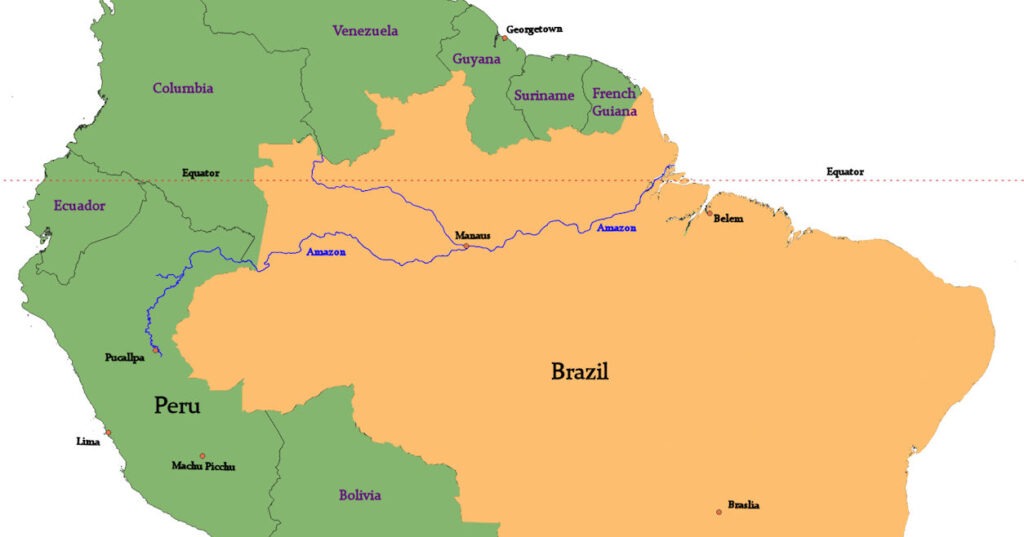
As the bird flies, the total distance would be about 2450 miles, but since the rivers have significant meanders, the actual river-mile trip length was about 4750.
For an idea of how meanders lengthen the trip, below is a view from Google Earth Pro of the Ucayali River, flowing north from the bottom of the photo, joining the Marañón River, flowing from the west, to form the upstream end of the Amazon in Peru.

In 1970, the adventurers had very little money and few places along the route to resupply. But they managed. Dick estimates the river current to be generally 3 miles per hour. Their small outboard engines could only increase their progress to about 7 miles per hour. They encountered wildlife on their way through the Amazon jungle, including Howler monkeys, parrots, and swarms of butterflies.

Brown Howler Monkey. photo credit Peter Schoen (not from the trip)
They took about five weeks to reach the halfway point, Manaus. Here, the Rio Negro from the north joins the Amazon, and the overall river flow roughly doubles. The party needed to stop at this relatively large city and obtain permits to go further down the river. The process normally involved bribes, for which they had no money to pay. They spent two weeks making a daily visit to the permit office, pleading to be allowed to continue. Eventually, the authorities wore down, and the adventurers were freed to continue.
About two weeks later, when they were almost to the ocean, they had a close-up wildlife encounter. A large boa constrictor had been swept into the river and was looking for a way out. Mark’s boat, with its low freeboard, seemed an option, and it started to climb in. Mark was able to fight it off with an oar.

Boa Constrictor. photo credit Alex Popovkin (not from the trip)
Once they reached the Atlantic Ocean, they could use their sails to hug the coast northward. After another two weeks and about 800 miles, Dick got off at Georgetown, Guyana, and flew home. Jim and Mark continued north to Miami.
a life reset
Dick had been out of touch with world events for about half a year, straddling the turn of the decade, 1970. Both Martin Luther King and Robert F. Kennedy had already been assassinated two years earlier. Campus protests against the Vietnam War ramped up while Dick was in South America. Along the Amazon, only the Law of the Jungle mattered. Mercifully, no news could reach Dick on the river. Looking back from today, Dick says, “The Amazon gave me a new identity.”
Back home, he resumed schooling. But going to church was challenging. Dick did not turn away from God and continued to go to church, even though he found it difficult. He felt that the church was disconnected from reality. He felt it was too easy for people to simply attend church on Sunday but not care about following all the teachings of Jesus.
Dick also soon found another source of strength. Pam was a nurse who had come to Chicago from Youngstown, Ohio. The nursing school was a haven, and the work to learn her profession took almost all of her attention. But she was drawn to nursing, perhaps, by having grown up in a loving Christian family. In the same way that Dick knew at an early age that his career would somehow involve helping people, Pam was drawn to nursing. She was a good listener and provided comfort even as Dick told story after story of things beyond her experience.
They naturally drew closer. Pam was ready to start working, while Dick finished up a degree in social work. Perhaps one event drew them so close that they knew they would stay together for life. Pam’s father was a combat veteran of World War II. He had seen front-line action in Italy. Near the end of the war, he witnessed the horrific Dachau concentration camp. Yet, returning home, he was able to fend off possible traumatic memories and provide a stable, loving home for his wife and family. At aged fifty, Pam’s father was hospitalized with a knee injury. It should have been easily taken care of. But he contracted sepsis. This life-threatening issue was not fully recognized in hospital protocols until the 1990s. Pam’s father survived combat only to die in the hospital from sepsis infection.
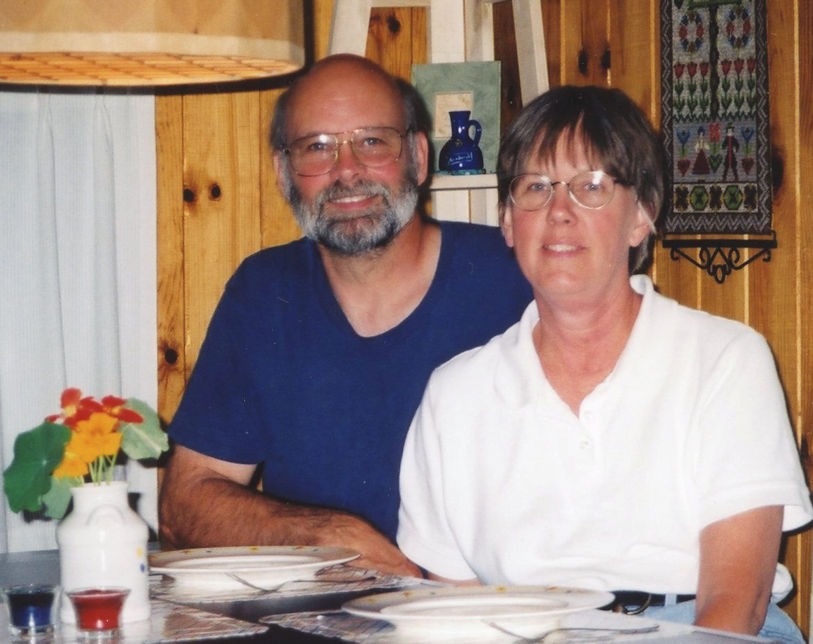
Nystrom family collection
So, Pam gave Dick the emotional stability he needed to move beyond the harsh realities of war, American civil rights turmoil, and the seeming indifference of church-goers. He remained committed to spiritual foundations while beginning a career in social work. They started in Grand Rapids, Michigan, where Dick served as a counselor for alcoholism. He soon realized he was wrestling with the same issues discussed around the kitchen table growing up: “What does it mean to follow Jesus?”
Dick and Pam decided to return to Chicago so he could study for a Master’s of Social Work at the top-rated Jane Addams School of the University of Illinois. Pam continued her nursing career. Their next adventure took them to the West Coast.
Although their roots were Midwestern, with family ties in Michigan and Ohio, Dick and Pam were drawn to the Pacific Northwest. Dick took a job with the State of Washington as a social worker, and Pam continued nursing. She also became pregnant with their first child. The environment was perfect for Dick’s next spiritual growth stage.
Concerning the purely physical realm, they were impressed with the beauty of the Seattle area, its mountain ranges with snowcapped peaks, Puget Sound, and many waterways. But they also joined a church that made them feel at home. Dick particularly valued the friendship of the pastor, John, who was about fifteen years older.
John had the skills of a spiritual mentor and, in Dick’s words today, “was very accommodating of my questions.” They had a spiritual bond forged within a regular human friendship. But John died. I’ll describe their bond of friendship in more detail, but it was John’s death that took Dick’s faith to another level.
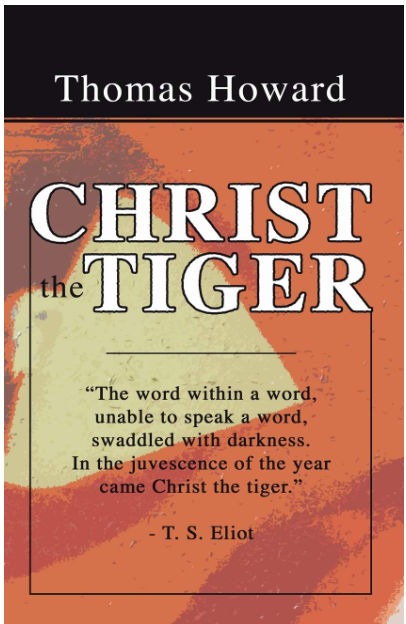
John’s strong faith, despite getting a terminal cancer diagnosis, moved Dick deeply. John had also recommended a book, Christ the Tiger, which chronicled the author’s early temptation to follow Christ without commitment to dogmas and institutions. Thomas Howard, the author, had eventually come to believe that without the church, a person would never encounter Christ the tiger.
A quote from the book gives a flavor of how Dick identified with the author:
In the figure of Jesus, we saw Immanuel, that is, God, that is, Love. It was a figure who, appearing so inauspiciously among us, broke up our secularist and our religious categories and beckoned us and judged us and damned us and saved us and exhibited to us a kind of life that participates in the indestructible. And it was a figure who announced the validity of our eternal effort to discover significance and beauty beyond inanition and horror by announcing to us the unthinkable: redemption.
The quote contains what amounts to a pingback for Dick today. According to Merriam-Webster, inanition describes a state of suffering from either a literal emptiness (of sustenance) or a metaphorical emptiness (of interest or energy). Dick was one of the friends who sat by John as he was dying in the hospital. John hated the hospital, but he remained a man of faith, despite his literal inanition and horror.
Note from the cover below that the author takes his title from a poem by T.S. Eliot:
link to Amazon Books
The Eliot poem is Gerontion, an Ancient Greek word meaning “little old man.” It is a long and complex poem in which an old man tries to deal with spiritual malaise, perhaps caused by his age and failing health, along with a sense of the post-World War I wasteland of Europe.
Yet, Howard’s book is hopeful. Dick was reminded of his disgust at the church after returning from Vietnam, which revealed supposed Christ-followers who did not pay attention to the radical nature of Jesus’ teaching. But Christ the Tiger calls people into community and storytelling. Being weak and vulnerable is possible at any age. Only together do we have a chance to remind each other of Jesus’ words and give encouragement to follow as best as we can.
Christ the Tiger helped reinvigorate Dick’s spirituality in his twenties, as he experienced the community of Seattle First Covenant Church and the friendship of John, fifteen years his senior. Yet, the book can still speak to Dick, since he is now an old man who could be thought to deal with similar themes as in the Eliot poem. Today’s world events do not provide much spiritual solace.
However, the book was not the primary driver of Dick’s spiritual rejuvenation. That was being with John and feeling the bonds of their two families. And it was sitting with John in the dark of a middle-of-the-night time in the hospital. As the dying mentor lay there, Dick felt a sense of loss in more ways than one. He said to himself, “I wish I had the faith I had as a child.” Then he turned to God and shared this sentiment. He regretted the way the world had impacted him. As the long night wore on, he sensed Jesus say to him, “Just take my hand.” In the presence of John, who had demonstrated the love of Christ, Dick felt the tangible love of Christ for himself. “It was a moment of grace that would bring healing to my broken heart.”
It may seem inexplicable, but with John lying unconscious beside him and the sense of the Spirit taking his hand in the dark, Dick felt spiritual renewal. Perhaps losing his friend drove home the teaching and pastoring of John even more deeply. Today, Dick feels that Psalm 23 and John 10 best describe his feelings of rejuvenation.
The Lord is my shepherd, I lack nothing… (Psalm 23)
…even if I walk in the valley of the shadow of death, I will fear no evil. (Psalm 23)
I am the good shepherd who lays down his life for his sheep. (John 10:11)
Dick was asked by the church to speak at John’s memorial service. His remarks were those of someone who could convey the privilege of being John’s friend and who had received John’s shepherding. Dick felt much gratitude from an appreciative congregation and perhaps a dawning realization that he had speaking abilities. He believed in telling stories about people and making connections for spiritual journeys.
He was still in his twenties, with Pam a young parent of two children, but part of a nurturing church community. Yet, many adventures still lie ahead.
Dick’s point of view today
Rather than continue chronologically, let’s get Dick’s take on spiritual life, more than five decades later. We will fill in some of the events that shaped it.
Dick is heart-sick about the current treatment of immigrants in America. Whether here illegally or not, people are harshly treated by officials who apparently feel free to violate human rights. Making it worse is the support by some Christians of this mistreatment. They seem to think the current president has been chosen by God and can do no wrong. But Dick sees a man who cares nothing for the teaching of Jesus.
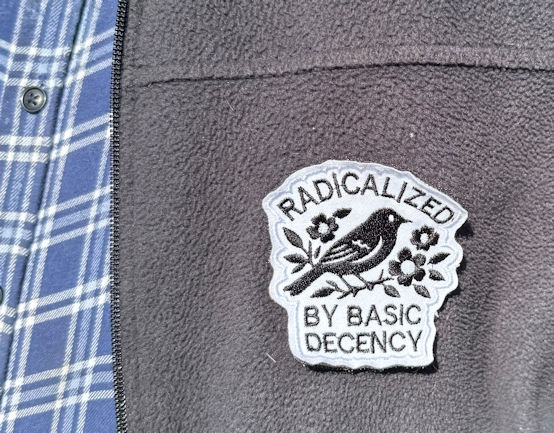
Dick has joined the protests of the Immigration and Customs Enforcement (ICE) facility in Portland, particularly teaming with Friends Church members who emphasize non-violence. He has worn a clerical collar to show that he is a peacemaker. He testified before the Portland City Council, which was deliberating about banning ICE agents from wearing masks to hide their identities. He said he had witnessed state-sanctioned cruelty against American citizens, which reminded him of apartheid in Lesotho and black oppression in the 60’s South. He also wears the following patch on his jacket:
This current point of view has developed over the past fifty years from serving as a pastor and serving with Pam as Peace Corps volunteers in Lesotho, Africa.
After the death of his mentor, John, Dick felt drawn into the ministry. Consulting with his family, he suggested that they temporarily leave Seattle so that he could pursue a divinity degree at North Park Seminary in Chicago. He promised the family that if they weren’t having fun, he would abandon this quest and they would return to their Pacific Northwest home church and friends.
Their two children were so little that they didn’t think leaving Seattle was a big deal. Apparently, Pam had fun with Dick on this next adventure, because they never returned to live in Seattle.
During his seminary training, Dick served as an intern in Aberdeen, Washington. Each summer, he also supplemented their income by working as a fisherman in Alaska. During these forays to the Arctic waters, the family stayed with friends in Seattle.
After seminary, Dick served the Covenant church in Omaha, Nebraska, for three years before being called to lead an international congregation in Stockholm, Sweden. Their children were in middle school. At this time, the Soviet Union collapsed, and times were difficult for its satellite countries, including the Baltic States. Dick’s church visited and sent support to churches in Estonia.
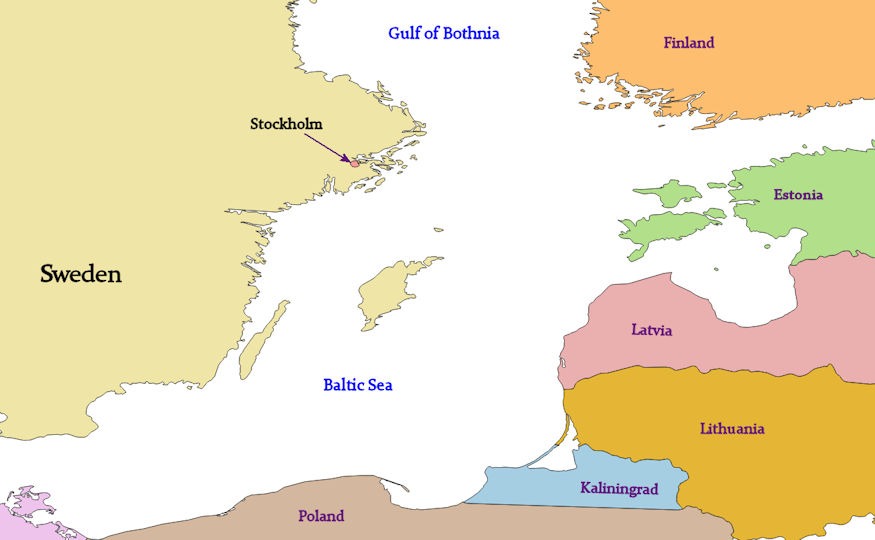
After two years, they returned to the US, and Dick served as pastor for a Covenant church in Madison, Wisconsin. This was his longest stint, at eleven years. Their children finished high school and became adults. Dick says, “It was a small church with a big heart.” They felt called to provide social services to the community around them.
By the turn of the millennium, Dick and Pam felt it was time for another adventure. With the blessing of their church and grown children, they volunteered with the Peace Corps and, in 2003, went to Lesotho, a small country surrounded by South Africa.
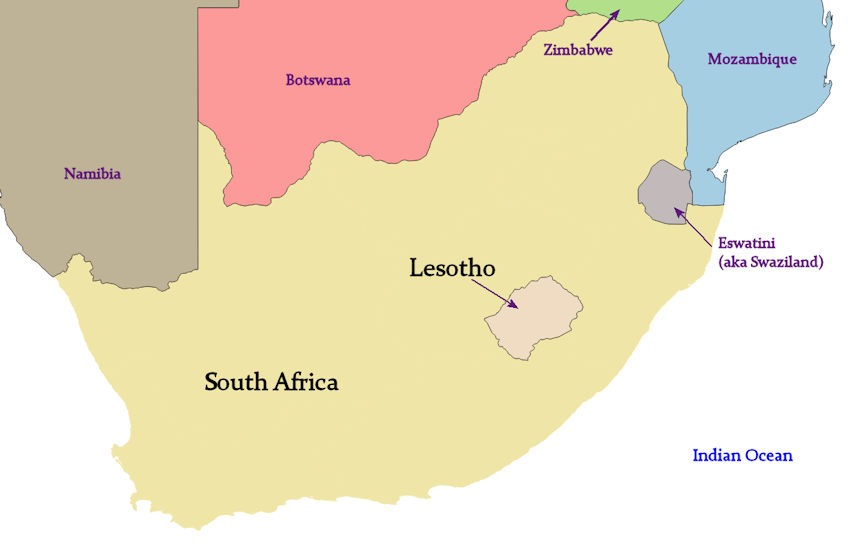
Lesotho, called “The Kingdom in the Sky,” is an entirely mountainous country, with the lowest elevation about 3000 feet. The location where the Nystroms served was at about elevation 6000 feet. Similar to many countries on the African continent, Lesotho is relatively poor. In 2025, it ranked close to Haiti in terms of economic conditions.
As part of a Seventh-Day Adventist ministry, Dick and Pam worked at a hospital whose primary service was providing help for patients with HIV/AIDS. When they first arrived, the conditions were so poor that they wondered what they had gotten themselves into. Inevitable culture shock began to give way as the people of the community welcomed them. The Nystroms worked there from 2003 to 2005 with the Peace Corps, then, in a second stint in 2007, they were invited to return apart from the Peace Corps, to help with fundraising.
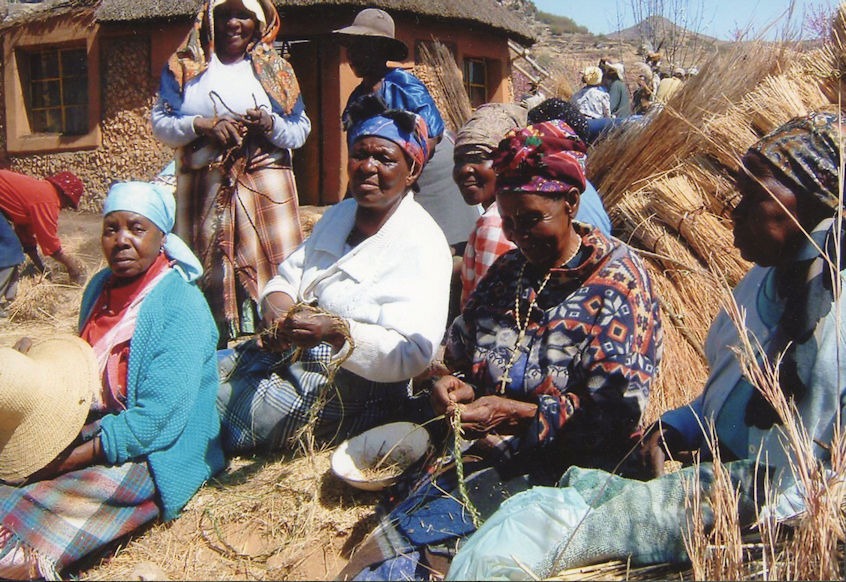
Nystrom family collection
Returning again to the US, Dick’s remaining pastoral career involved serving as an interim pastor for churches that were in the process of hiring a new lead after their previous one was called to another church. This began in Decorah, Iowa, for two years, then suburban Des Moines, Iowa, for two more years.
looking ahead
Now seventy-nine and retired from paid ministry, Dick continues to volunteer his services in numerous ways. He and Pam moved to Portland, Oregon, to be near their son and family. Dick has served as an interim pastor for two Portland Covenant Churches. He has also used carpentry skills picked up over the years. These skills took him away from home again, helping with disaster relief twice in Haiti, twice in Houston, and a few other places.
Dick remains optimistic, even with the US mistreatment of its own citizens and a national administration that considers anyone who doesn’t support their policies as enemies of the state. He demonstrates the possibility of being both heartsick and spiritually positive simultaneously. His faith has been sustained by believing in people and hearing their stories, knowing first-hand that being rich, famous, or powerful doesn’t count for much in God’s Kingdom.
A recent event may best show Dick’s spiritual optimism in the face of today’s challenges. In the spring of 2026, Dick joined an interfaith silent march of protesters at the Portland ICE facility. They circled the nearby street, pausing only to lay flowers on the sidewalk in front of the facility where immigrants were being detained, possibly mistreated, and removed elsewhere. The group of about one hundred marchers, making no noise, was puzzling to some observers. A local reporter stepped up to Dick and asked for an explanation.
Dick said, “We are an interfaith group that always observes ten minutes of prayerful silence before we march. And that’s pretty much it!” But then he added, “I suppose we are naïve enough to think we might make a difference.”
The young reporter responded immediately, as if she wanted to reassure the group: “Oh, but it does make a difference. I’ve been in front of the Detention Center all day, and as your group arrived, there was a sense of peacefulness that began to settle over this noisy and contentious space.”
At home, Dick credits his long-term marriage with Pam for providing a safe haven. He also enjoys learning musical instruments to maintain good mental health. He plays piano, harmonica, and the bowed psaltery.
Keeping in mind his favorite Bible passages, Psalm 23, and John 10 (partially quoted above), Dick senses God’s love for all of us. The Good Shepherd does not wish any of us to fall away, nor will he give up on us, no matter how lost we seem to be. Dick has experienced firsthand, living in many parts of the US and with his international adventures, that we humans have more in common than not. Yet, presupposing that we know what people need or what they should believe is not The Way. For Dick, a better tack is to listen to people’s stories and share some of your own.